SSF Resilient Energy Certificate Program › Understanding Electricity Markets
Course
Understanding Electricity Markets: Wholesale, Retail, and What Comes Next
Live, online cohort begins October 28, 2026
Four Wednesdays · 11 AM to 1 PM Eastern
Recorded on-demand version follows the live cohort
Awards the SSF Certificate of Completion
Counts toward the SSF Resilient Energy Certificate and the Comprehensive Certificate
Taught by Matthew Haupt, PE, CEM, CPP
Former Energy Director, Naval Facilities Engineering Systems Command
$495 · 25 seats
Course overview
Every procurement decision, every energy bill, every policy debate runs through machinery most professionals were never taught to understand. This course gives you the foundation to navigate these markets as a working practitioner, not as an economist or engineer, but as someone whose decisions depend on understanding how power is bought, sold, regulated, and priced.
The course moves from the origins of the U.S. electricity system through the mechanics of modern wholesale and retail markets to the forces reshaping those markets now: artificial-intelligence-driven load growth, the energy transition, new generation technologies, and the stress events that reveal how markets and the grid perform under strain. U.S. markets are the primary lens. Where global energy security intersects with U.S. market dynamics through liquefied natural gas pricing, supply chain exposure, and geopolitical risk, the course makes those connections explicit.
Who should enroll
Built for practitioners across sectors whose work touches energy markets without requiring deep technical specialization.
No engineering background is required. The optional Energy Basics 101 primer brings all students to a common starting point.
Course organization
Three blocks. Nine sessions across four live meetings.
The course is organized as three blocks of three sessions each, roughly eight hours total. Block I sets the historical and institutional foundation. Block II works through market operations and performance. Block III turns to the emerging pressures reshaping the sector and closes with case-study analysis of recent market events.
Electrical Evolution: History, Governance, and Institutions
How the U.S. electricity system was built and governed, and how that architecture shapes markets today.
Session 1 · Birth of Commercial Power (1890–1935)
- Edison, Tesla, and Westinghouse — the origins of the modern grid
- Holding company abuses and the legislative response: Public Utility Holding Company Act and Federal Power Act
Session 2 · Industry Governance and the Commercial Landscape
- The regulatory compact, monopoly franchises, and cost-of-service ratemaking
- The institutional framework: Federal Energy Regulatory Commission, state commissions, Department of Energy, North American Electric Reliability Corporation
Session 3 · Organizing Generation as a Competitive Activity
- Independent System Operators and Regional Transmission Organizations — footprints, roles, real-time balancing
- The three core market products: capacity, energy, and ancillary services
Block II
Economic Fundamentals
How wholesale electricity markets actually work: pricing mechanics, market products, and the institutional structures that hold it all together.
Session 4 · Energy Market Operations: Day-Ahead and Real-Time
- Wholesale market structure, bidding mechanics, and how buyers and generators clear
- Locational Marginal Pricing and what actually drives wholesale prices
Session 5 · Capacity Markets and Ancillary Services
- Why capacity markets exist separately, and how auctions ensure long-term reliability
- Frequency regulation, spinning reserves, and how ancillary services are traded
Session 6 · Wholesale Market Performance and the Retail Connection
- How competitive wholesale markets have performed against their original promise
- From wholesale to retail: rate structures, tariffs, power purchase agreements, and community choice aggregation
Block III
Markets Under Pressure
Forces outside the original market design are reshaping the system. What that means for practitioners navigating markets today.
Session 7 · New Demands, New Technologies, New Pressures
- Artificial-intelligence-driven data center growth and the demand surge straining markets designed for a different era
- Small modular reactors, large-scale storage, offshore wind, and global energy security exposure through liquefied natural gas and allied dependencies
Session 8 · The Practitioner's Toolkit
- Demand response, tax credits, grants, and rebates that affect organizational energy economics
- Renewable energy procurement mechanics and how federal buyers navigate wholesale markets
Session 9 · Stress Events, Market Lessons, and What Comes Next
- Texas Winter Storm Uri, the California duck curve, and the PJM capacity market redesign
- How to read market stress signals, and where the energy transition is taking the U.S. grid
About your instructor
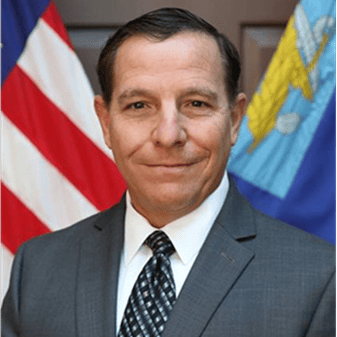
Matthew Haupt
Professional Engineer · Certified Energy Manager · Certified Protection Professional
President, All Threats Considered · Former Energy Director, Naval Facilities Engineering Systems Command
Matt Haupt spent three decades in C-suite leadership at the intersection of energy, security, and national infrastructure. Most recently he served as Energy Director for the Naval Facilities Engineering Systems Command, where he oversaw energy strategy and market engagement for one of the largest energy-consuming institutional portfolios in the United States. That experience gives him a perspective on electricity markets that most instructors in this field do not have: what markets look like from the other side of the meter, where institutional buyers operate under real constraints of mission, reliability, and public accountability.
Through All Threats Considered, Matt now advises organizations on energy security, market strategy, and infrastructure resilience. He brings that current practitioner lens to every session in this course.
What you will learn
Working command of the material.
After this course
You will understand how wholesale prices are set and where the market is heading, and be able to apply that to buying power, shaping policy, or analyzing the sector.
Optional pre-course primer: Energy Basics 101 (about 30 minutes, recorded, included). Covers the fundamentals of electricity, energy, and power for students with limited technical background. No engineering background is required to take the course. Provided ahead of the course.
How the course runs
Live instruction
Four two-hour sessions taught by Matt Haupt over four consecutive Wednesdays, October 28 through November 18, 2026, 11 AM to 1 PM Eastern. Sessions include working question-and-answer time.
Recording access
Every session is recorded and posted for enrolled students within one business day, so anyone who misses a session or wants to review keeps full access to the material.
On-demand release
Following the live cohort, the course transitions to on-demand enrollment for participants who cannot make the live series.
Course materials
Downloadable slide decks, references, and reading lists accompany each block.
Practitioner Webinar Series
Standing access to the SSF Practitioner Webinar Series, which runs separately from the course sessions and continues after the cohort ends.
Qualifying quiz
A short end-of-course quiz confirms your working command of the material. A score of 70 percent is passing, with two retakes available. Passing releases your Certificate of Completion and credits the course toward the Resilient Energy and Comprehensive Certificates.
Credential from this course
SSF Certificate of Completion, awarded after passing a qualifying quiz. Seventy percent is passing; two retakes are available.
This course also counts toward the SSF Resilient Energy Certificate (any four of the seven program courses) and the SSF Resilient Energy Comprehensive Certificate (all seven). See the full program for the other courses and how the credentials work together.
$495 · 25 seats · Live cohort begins October 28, 2026
The SSF Resilient Energy Certificate Program
This is one of seven courses in the SSF Resilient Energy Certificate Program. Each stands on its own. Together, they cover the full working landscape of the U.S. electric sector, taught by senior practitioners in each domain.