The American electricity grid was largely built around predictable, planned load growth and centralized generation. It now faces the opposite: demand acceleration from data centers, electrification, and industrial reshoring, colliding with a supply chain that quotes gas turbines out to 2031 and utility-scale transformers at four and a half years. This session brought together a former Navy and Marine Corps energy director, a power-sector economist, an energy law scholar, and a distributed-energy specialist to examine what the mismatch is actually costing and what tools are available to close it.
What the panel argued
Matt Haupt
“It’s a century-old machine being forced to perform modern miracles. A system that was initially built before the airplane is now expected to power data centers and supercomputers.”
Nothing is wrong with the grid, in Haupt’s framing. It is largely functioning as it was designed, planned, and constructed 50 to 80 years ago. The problem is that today’s demands no longer match that architecture.
Deregulation in the 1990s split generation, transmission, and distribution into separate entities. Today, Haupt noted, the grid operates within a governance structure of fifty public utility commissions, nine ISOs and RTOs, roughly three thousand utilities, plus federal agencies and permitting authorities. Modernization moves at the speed of the slowest stakeholder.
Transmission lines take seven to twelve years to build. Data centers take twenty-four months. About thirty percent of U.S. generation, transmission, and distribution infrastructure is now more than fifty years old. The problem is not technological. It is procedural.
Peter Fox-Penner
“It can’t be solved by any one of these. Everyone’s needed, and it’s very hard to do ten big things at once. But that’s what the industry needs to do.”
Fox-Penner pushed back on the doom framing while accepting the diagnosis. The grid still works, is still relatively affordable at the national average, and the people running it are doing serious work under real constraints.
But the capital cycle is unprecedented. Utility outlays have almost doubled over the past decade and are projected to total $1.1 trillion from 2024 through 2029. Copper prices are up 40% since 2021 and projected to double again by 2030.
Data center demand concentrates in the Mid-Atlantic, Texas, and the Southwest. Those are also the regions where rapid load growth is adding to system strain and affordability pressures. His argument was against single-lever thinking: perhaps ten tools need to be pulled at once, and the industry has never had to do ten big things at once before.
The affordability squeeze is not a projection. More than a third of American households now report choosing between the power bill, medical bills, and groceries, and electric disconnections for non-payment are at their highest rate in at least twenty-five years. Sklar corrected the standard “electricity is only 2% of the household budget” figure during the discussion: for lower-income households the number is 9.1%, with transportation costs at 8.7% on top of that.
Donna Attanasio
“This idea of consumption that can be flexible, that can help enhance grid reliability rather than simply be the subject of the grid.”
Attanasio focused on what state-level regulators can actually change. Interconnection queue reform under FERC Order 2023 is beginning to work. PJM has cleared its backlog. MISO is applying AI to shorten study times.
The more interesting lever, in her view, is at the retail level. Large sophisticated loads may want to bring their own generation, but multi-user, third-party, or noncontiguous microgrid configurations can trigger public-utility laws that make those arrangements difficult or impossible.
Her proposal: state safe harbors that let data centers and other large customers operate microgrids by contract, aligning the cost of new capacity with the entity creating the new demand. Privately financed microgrids could shift some of the investment risk and capital burden away from utilities and their other customers.She pointed to a related state-level lever already in use in a handful of jurisdictions. She named the District of Columbia and, as she recalled, Vermont and Delaware, as places that have created dedicated sustainable-energy or efficiency utilities to run efficiency programs rather than leaving that work to the incumbent utility whose incentives run the other way.
Scott Sklar
“You cannot generate yourself out of this problem. I’m hoping that everyone thinks about not what new electricity they can bring online, but an equal amount of electricity they can take offline.”
Sklar closed on efficiency and self-healing architecture. Gas turbine backlogs run to 2031. Transformer lead times reach four and a half years. Small modular reactors are not a near-term option. Nuclear output drops in heat waves.
The response is not to chase more centralized generation. It is to build the grid the way telecom and the internet were built: distributed nodes, sensors, reclosers, the capability to island failing sections while the rest keeps working.
Over twenty-five years of guiding microgrids, Sklar said, he has been involved with more than seven hundred and ninety projects worldwide and has never had one that did not work. The technology exists. The organizational will to deploy it at scale does not yet.
He also flagged the security dimension. Attacks on U.S. grid infrastructure have quadrupled over the past fifteen years. To illustrate the vulnerability, he described his own Arlington substation, about three miles from downtown Washington, saying a vehicle could penetrate its fence and disrupt the area for months. Cameras alone, he argued, are not adequate protection. Physical hardening and cyber defense of substations require much stronger action at the utility, local, state, and federal levels.
Where the panel converged
The grid’s reliability, investment, and affordability challenges are increasingly intertwined. Solutions that add capacity without addressing cost, efficiency, and system flexibility will be incomplete.
Energy efficiency emerged repeatedly as an important and neglected resource. Flexible load, microgrids, distributed generation, and storage offer practical ways to relieve pressure on the centralized system.
No single technology, regulatory reform, or investment strategy will solve the problem. The central challenge is coordinating multiple solutions across a fragmented system.
The panel
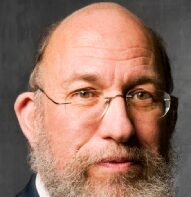
Scott Sklar
Moderator and panelist. Sustainable Energy Director at GW’s Environmental and Energy Management Institute. Adjunct professor at GW teaching sustainable energy and critical infrastructure. President of The Stella Group. SSF energy faculty.
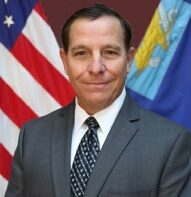
Matt Haupt, PE, CEM, CPP
SSF energy faculty. Former Energy Director for the Navy and Marine Corps. Retired U.S. Navy Civil Engineer Corps Officer.
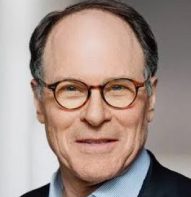
Peter Fox-Penner
Principal at The Brattle Group. Chairman, Impact at Energy Impact Partners. Founding Director of the Boston University Institute for Sustainable Energy. Former senior official at the U.S. Department of Energy and the White House Office of Science and Technology Policy.

Donna Attanasio
Managing Director, GW Alliance for a Sustainable Future. Professorial Lecturer in Law at GW Law School. Formerly Assistant Dean for Energy Law at GW Law and Partner at White & Case.
HOSTED IN PARTNERSHIP WITH


Environmental and Energy Management Institute
A research and applied learning institute at GW’s School of Engineering and Applied Science, focused on the technical, policy, and management dimensions of the energy transition.
Alliance for a Sustainable Future
GW’s university-wide initiative convening research, teaching, and public programming across disciplines on sustainability, energy, and climate.

Security and Sustainability Forum
Convening global experts since 2009 on energy, climate, and societal resilience.
Free access to 300+ webinar recordings. Subscribe for alerts and archive access.