Sustainability Leadership Sponsors
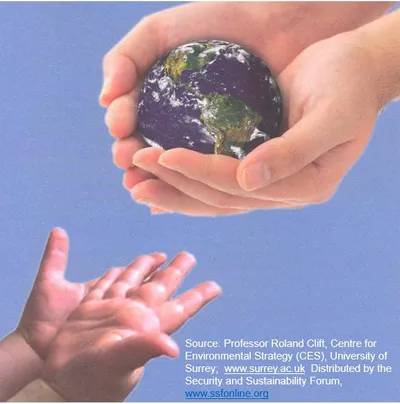
Bringing Sustainability Leadership to a Global Stage
Our staff is expert at enabling exceptional organizations to demonstrate their sustainability leadership on an online global stage to meet their business, educational and thought leadership goals. We employ an evaluation framework to ensure that each engagement reaches the target audience, has the desired impact, and meets explicit outcome objectives. Clients include:
Universities and nonprofits seeking to cement thought leadership, promote educational offerings and initiate new centers of excellence and position for research grants
Businesses promoting their sustainability products and services, seeking investment in new technologies and startups, and demonstrating climate leadership
Government agencies conducting public outreach and training about their sustainability services and programs.
SSF has over 25,000 subscribers to our webinar programs. We use that list as the core of our communication and outreach programs and use social media and promotion partners to expand webinar participation from target sectors. We can help your organization meet brand and reputational goals and lead transformative change in your sector. Download a fact sheet about SSF.
Engagements with Exceptional Clients
Sixth Year Producing a University Sustainability Education Series
ERS Advisors is in its sixth year of helping the Arizona State University's School of Sustainability (SOS) cement its global leadership in climate resilience education and thought leadership. We have produced 20 resilience webinars featuring ASU initiatives and attracted over 10,000 unique participants. ASU uses this increased access to market its professional education certificate courses. Download a one-page paper on the benefits SOS sees from the SSF webinar programs.
Seventh Year of a Book Publisher's Sustainability Series
Publisher Island Press’ mission is to provide the best ideas and information to those seeking to understand and protect the environment. We have produced 30 sustainability Island Press webinars featuring its authors and Urban Resilience program funded, in part, by the Kresge Foundation. More than 20,000 people have signed up for the Island Press series.
Green Purchasing Association Launches Global Campaign with SSF

The Global Electronics Council works towards creating a world of only sustainable technology products and services through programs and partnerships to address these negative environmental and social impacts while maximizing the many positive benefits that technology brings to our daily lives. In the run-up to COP26, GEC used the SSF webinar platform for two webinars to announce and open discussions around its 2022 global Purchaser Commitment campaign. The multi-year campaign seeks to leverage the power of sustainable, circular, and equitable procurement to mitigate climate change and invest in the people necessary for lasting impact.
Data Analytics Firm Proves its Climate Assessment Value
Chatmine Technologies is a data mining firm with roots at Boston University. Its webinar on using big data to answer sustainability questions was our highest rated session, attracted 1100 participants and resulted in three new contracts for Chatmine.
Supporting the Launch of a University Climate Action Center
When Antioch University New England was planning the Center for Climate Preparedness and Community Resilience, it turned to us to develop a three-webinar series featuring AUNE expertise in community resilience. The result was a core marketing base of several thousand interested professionals that launched its educational offerings, research and capacity building solutions.
Texas Agency Explains its hurricane disaster recovery program.
Hurricanes Harvey, Ike, Rita, and Dolly, plus floods in 2015 and 2016, along with wildfires in Texas put the state on the leading edge of disaster preparedness, response and long-term recovery. ERS Advisors teamed up with the Texas General Land Office and the Cadmus Group to produce an educational webinar about operational considerations in community revitalization.
Promoting Project Drawdown
Project Drawdown is the most comprehensive plan ever proposed to reverse global warming. ERS Advisors produced a webinar with Paul Hawkin, Founder of Project Drawdown and one of the environmental movement’s leading voices. Registration topped 2400 for the online event.
Producing GWU's Online Sustainability Professional Education Curriculum
ERS Advisors is the designer, producer and marketer for a new online sustainability professional education curriculum for the Environmental and Energy Management Institute at George Washington University. We are developing certificate courses in Electrification, Corporate Resilience and the Global Politics of Resources. Student enrollment has far surpassed expectations for current offerings.
Sixth Year Supporting a University Decarbonization Collaboration
LightWorks at Arizona State University discovers and invents solutions to society's fuel, electric, and social challenges. For the past six years, we have led LightWorks' efforts to develop global collaborations to decarbonize industry and prepare society for a new carbon economy. We have helped ASU feature new low-impact technologies and accelerate investment in the decarbonization innovation pipeline through webinar programs and policy dialogue held in Washington, D.C..
Faith-Based Climate Action Outreach

The Parliament of the World's Religions, with funding from the Hanley Foundation, commissioned a two-webinar series to attract new congregations to its global Climate Committments Project. Panelists included Rev. Dr. Joshtrom Isaac Kureethadam, Coordinator of the Sector of “Ecology and Creation” at the Vatican, discussing Pope Francis’ second encyclical, “On Care for Our Common Home.”
Increased Registration for Annual Science and the Environment Conference
The National Council for Science and the Environment has turned to us for the past 10 years to enhance participation in its annual science policy conference. We produce NCSE educational webinars running up to the conferences, execute an email campaign to increase registration and sponsorship, and manage post-conference collaborations to futher NCSE sustainability leadership goals.
Solar Energy Product Marketing
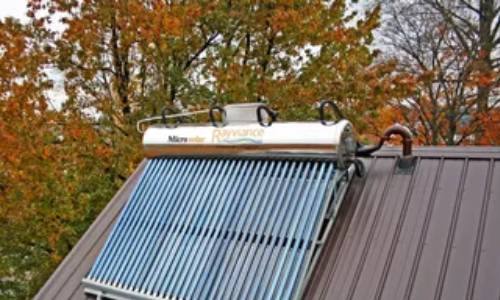
Rayvience turned to ERS Advisors to develop a webinar to market its new solar hot water product. The webinar attracted over 600 participants and produced a list of prospects and product representatives.